
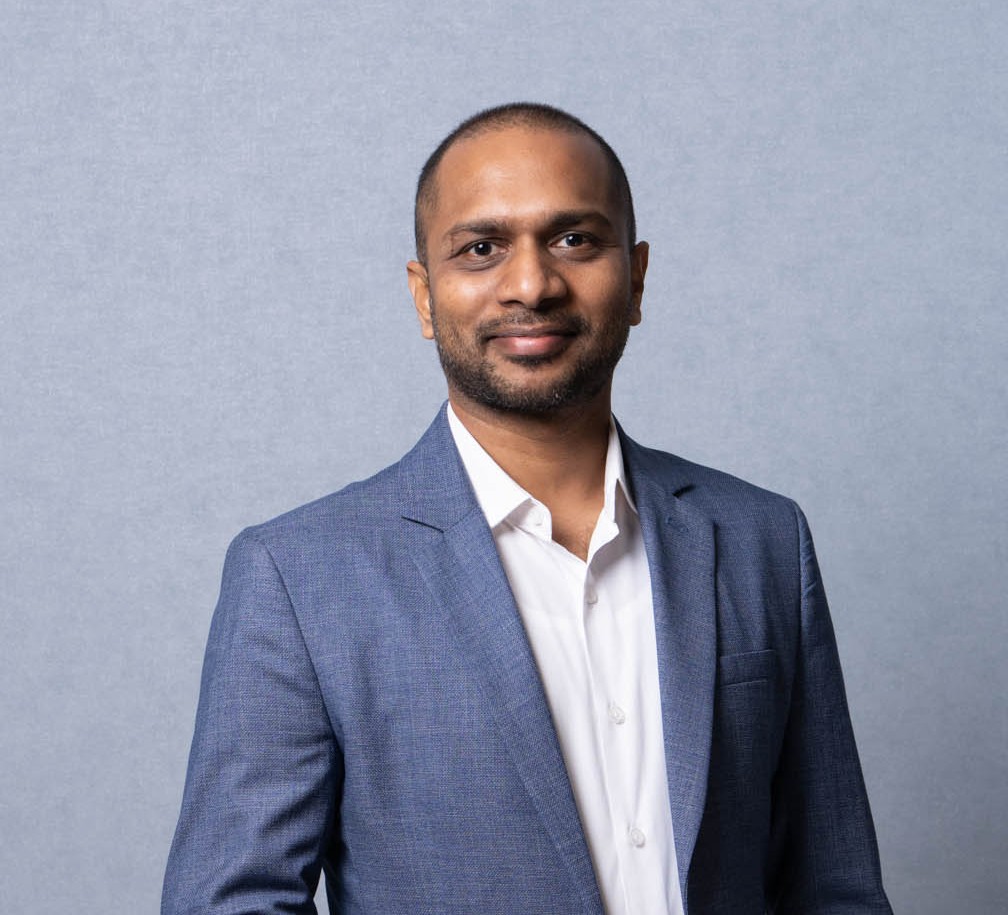
In the following Q&A, Kavin Karunamoorthy, Chief Executive Officer & Non-Independent Executive Director - First Capital Asset Management Limited, offers insights into the fundamental concepts of investing for potential investors, simplifying core principles to unravel prevailing misconceptions as the first step to financial freedom.
Q: Which grows more money: saving or investing?
A: Most people believe savings build wealth. However, savings only preserve finances for short-term goals and emergencies. They don’t grow your money. Moreover, their real value declines during times of inflation. This is when the monetary value of a good or service increases, reducing your money’s purchasing power.
Investing is an art that makes your money work for you. Successful investing depends on five principles: compounding, risk vs return, consistency, diversification, and liquidity. By allocating funds into assets like government securities, equities, unit trusts, and corporate debt, investing facilitates long-term growth and financial freedom.
The growth of savings vs. investing in Sri Lanka
Data sources & methodology
Q: What is the compounding effect on one’s investments?
A: Compounding entails earning “returns on returns”. Unlike savings, it’s a significant driver of wealth creation. Compounding can turn modest investments into remarkable sums over decades. For example, interest earned on treasury bonds can be reinvested into new bonds upon maturity. Over time, this reinvestment creates a compounding effect.
Q: How does 'risk' discourage people from investing?
A: Risk and loss aversion are psychological barriers that make people hypercautious. Risk is unavoidable in any financial decision.
There’s a misconception that savings are ‘risk-free’. However, most people don’t take economic shifts and inflation into consideration.
Since risk tolerance depends on age, income stability, and financial responsibilities, young investors take more risks compared to mid-career and retired individuals who approach investments with more caution.
Risk can be managed but not eliminated. Beginners should assess personal risk tolerance, avoid emotional traps, and strategise long-term planning to mitigate volatility.
Q: What options are available for beginners looking to invest?
A: Direct investing is ideal for disciplined individuals who can use capital markets independently, strategically monitor economic trends, make buy/sell decisions, and enjoy learning about markets. This approach requires confidence, time, and financial knowledge.
Ideally, beginners should rely on unit trusts because they allow anyone to begin an investment journey irrespective of their capital. Led by a qualified fund manager, research analysts, and risk specialists, a unit trust makes smart investment decisions on behalf of the investor.
As professionally managed investment funds, unit trusts offer security because they pool many investors’ money, reducing risk by diversifying across multiple assets with strict oversight.
They also reinvest dividends and interest from underlying assets back into the fund. This means your returns compound over time.
Q: Which is more important: consistency or timing the market?
A: Successful investing is built on steady progress over a long period of time. Timing the market sounds promising, but it’s impossible to execute consistently. Even experienced investors can’t predict how geopolitical or economic shocks will destabilise markets. Timing the market often leads to frustrating underperformance, missed opportunities, and emotional decision-making which can harm long-term returns.
Consistency in investing, including regularly contributing to your portfolio through unit trusts, offers a more sustainable approach and ensures you capture market recoveries, mitigate volatility, and build resilience.
Q: What is diversification and why is it relevant?
A: Diversification is a risk management strategy that involves spreading investments across different asset classes, sectors, and geographic regions. The reasoning is: if one investment performs poorly, others in your portfolio can offset the loss and protect your wealth.
Your portfolio should never rely on a single investment or industry. It’s a fundamental principle best summarized as: “Don’t put all your eggs in one basket.”
Unit trusts help strategically break your money into calculated proportions across several sectors and instruments. For example, a unit trust fund is the easiest way to diversify because it cannot invest more than 15% of its fund in a single company.
While systematic and market-wide risk cannot be eliminated, diversification eases return and provides stability over time.
Q: How does liquidity relate to having an emergency fund?
A: Liquidity is the ability to turn an investment into cash quickly, without suffering significant losses. People mistakenly assume all their money needs to be instantly accessible.
An emergency fund ensures you can handle unexpected expenses without disrupting your long-term investments. It’s a critical asset in unpredictable and costly emergencies. Traditionally, people keep emergency funds in savings accounts which rarely grow due to low interest rates.
Money market funds are a better option for liquidity because they offer quick cash, minimal risk of financial loss upon withdrawal, higher returns than savings accounts, and prevent missed growth opportunities.
You need just the right amount of liquidity. The rest can be invested.
Q: What are the biggest misconceptions people have about investing?
A: People assume investing is only for the wealthy. However, beginners can enter the market by leveraging options like unit trusts using amounts as low as a few hundred or thousand rupees. They do not need to wait years to accumulate capital.
The next misbelief is that extensive financial expertise is a requirement.
Unit trusts resolve both misconceptions because investors can leverage expert insights, research, and risk management without needing excessive capital or expertise. Professional fund managers exist precisely to bridge these gaps.
Q: What is your advice to beginners looking to start building wealth?
A: Begin your investment journey today. Use a unit trust to navigate investment cycles and other options to improve your wealth. Unless you achieve financial freedom through investments, be prepared to work indefinitely, because your money will never grow beyond the labour you put in.
JXG (Janashakthi Group) is a Sri Lankan financial conglomerate, with a presence spanning in the insurance, finance & leasing, and investment banking verticals. Each of the Group’s core businesses is a formidable player in its industry. JXG comprises First Capital Holdings PLC, Janashakthi Insurance PLC, Janashakthi Finance PLC and its philanthropic arm, the Janashakthi Foundation.
JXG’s roots trace back to the early 1990s when its founder and Chairman emeritus, Mr. C.T.A. Schaffter, established Sri Lanka’s first specialized life insurance company, playing a pivotal role in revolutionizing the industry. Over the following decades, through strategic mergers and acquisitions, the Group has expanded its reach and influence.
The 'X' in the brand name symbolizes exciting opportunities, expansion, and exponential growth, representing the multiplication of potential as a unified entity. Guided by its purpose of "Breaking Barriers, Forging Futures" JXG is shaping the future of Sri Lanka’s financial industry.